Radon in Homes: Testing, Health Risks and What Homeowner's Should Know
Radon in Manitoba Homes and What to Know at Every Stage of Homeownership
Radon is one of the most important—and often overlooked—factors affecting indoor air quality in Manitoba homes. This naturally occurring, invisible, and odourless gas can pose serious health risks with long-term exposure. The good news is that radon testing is simple, and radon mitigation is highly effective once elevated levels are identified.
Whether you are buying a home, selling a property, or living in a home long-term, understanding radon is a key part of responsible homeownership in Manitoba.
What Is Radon?
Radon is a colourless, odourless radioactive gas found naturally in the environment. It forms as uranium breaks down in soil and rock. Because radon is a gas, it can move easily through the soil and enter the air we breathe.
When radon enters homes and buildings, it can accumulate to levels that may pose a health risk. Since radon cannot be seen, smelled or tasted, testing is the only way to know if elevated levels are present.
Long-term exposure to high radon levels is,
-
The leading cause of lung cancer among non-smokers
-
The second leading cause of lung cancer overall, after smoking
No immediate symptoms occur with radon exposure. The risk is based on concentration levels and duration of exposure.
Why Radon Is Common in Manitoba Homes
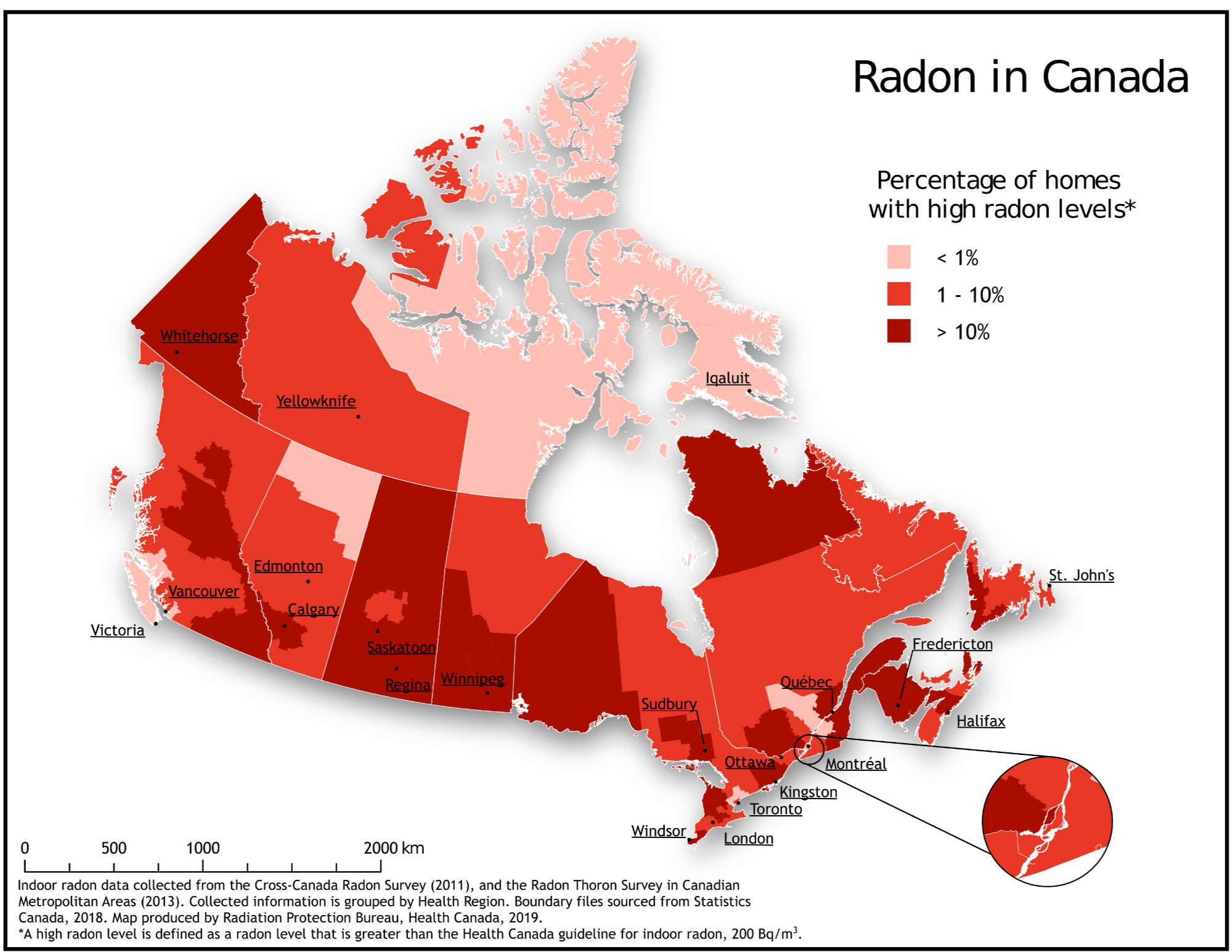
Radon can be found anywhere, but Manitoba has historically reported higher radon values than the national average.
Health Canada estimates,
-
About 7 percent of Canadian homes exceed the 200 Bq/m³ guideline
-
Approximately 19 percent of Manitoba homes exceed the guideline
Several factors increase the likelihood of elevated radon levels in Manitoba homes, such as,
-
Uranium-bearing soil and geology
-
Long, cold winters that keep homes sealed
-
Basements and slab-on-grade foundations
-
Energy-efficient construction that limits natural air leakage
Radon levels can vary significantly between neighbouring homes, even on the same street. A home’s age, price, or condition does not predict radon risk.
How Radon Enters a Home
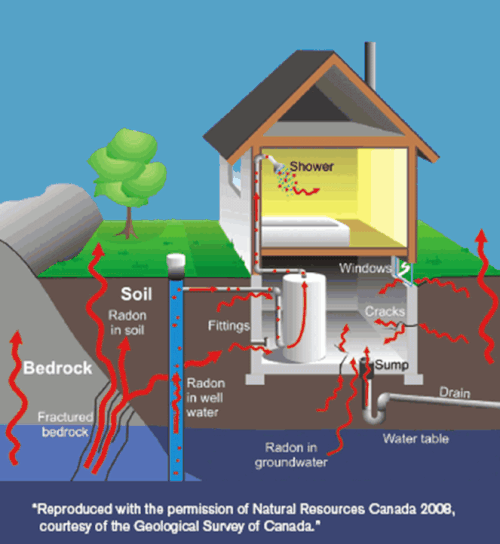
Radon enters homes because indoor air pressure is often lower than the pressure in the surrounding soil. This pressure difference draws soil gases inside.
Common radon entry points include,
-
Cracks in foundation walls and floors
-
Gaps around plumbing and utility penetrations
-
Sump pits and floor drains
-
Construction joints and porous concrete
-
Crawlspaces and slab foundations
Renovations that improve insulation or air sealing can sometimes increase indoor radon levels if ventilation and pressure balance are not addressed.
Health Canada Radon Guidelines
Radon is measured in becquerels per cubic meter (Bq/m³), a unit that measures radioactivity.
Health Canada recommends that the average annual radon level in a normal living area should not exceed 200 Bq/m³.
This guideline applies to areas of the home where someone spends more than four hours per day on an ongoing basis.
Radon levels can vary,
-
From season to season
-
From day to day
-
From room to room
-
Between neighbouring homes
Because of these fluctuations, Health Canada recommends long-term testing — ideally over at least three months — to determine an accurate annual average.
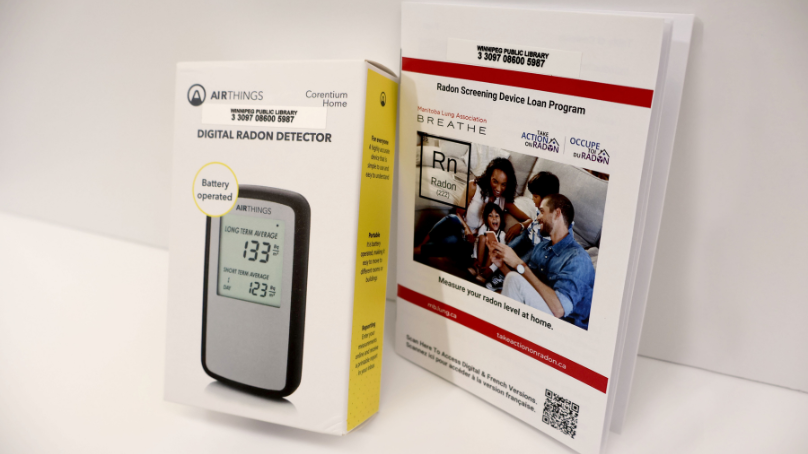
How to Test for Radon
-
Short-term tests (2–7 days)
-
Often used during real estate transactions
-
Provide quick results
-
Less accurate than long-term testing
-
-
Long-term tests (90 days or more)
-
Recommended by Health Canada
-
Ideally conducted between October and April
-
Provide the most accurate annual average exposure
-
Action is recommended if radon levels exceed 200 Bq/m³. Find a Radon Test Kit provider near you at Take Action on Radon.
Testing should be done in the lowest lived-in level of the home where occupants spend more than four hours per day.
Radon Risk and Lung Cancer
The risk associated with radon exposure increases with both concentration and duration. Smoking significantly increases that risk.
Health Canada estimates that,
-
A smoker exposed to 200 Bq/m³ over 70 years has about a 17 percent lifetime risk of lung cancer.
-
A non-smoker exposed to 200 Bq/m³ over the same period has about a 2 percent lifetime risk.
-
At 800 Bq/m³, the risk increases to 30 percent for smokers and 5 percent for non-smokers.
While smoking remains the primary cause of lung cancer, radon exposure is a significant and preventable environmental risk factor.
Radon and Indoor Air Quality
Radon is part of the broader indoor air quality picture. While systems like HRVs, ERVs and central air conditioning improve ventilation and comfort, they do not eliminate radon when levels are elevated.
Why Radon Matters
-
Leading cause of lung cancer among non-smokers
-
Levels can increase after renovations or air sealing
Testing and Solutions
-
Radon testing is simple and affordable
-
Proven radon mitigation systems are available
-
Ventilation systems do not replace radon mitigation
Radon is common, manageable, and easy to address once identified. Manitoba Health provides information to homeowners and recommends all homes to be tested.
Radon at Every Stage of Homeownership
Buying a Home
-
Radon testing is commonly done during the home inspection period
-
Elevated radon levels are not a deal-breaker
-
Radon mitigation systems are effective and widely used
-
Buyers may negotiate mitigation as part of the purchase
-
Long-term testing provides the most accurate results
Understanding radon during due diligence allows buyers to make informed decisions rather than emotional ones.
Selling a Home
The Manitoba Property Disclosure Statement includes a question about radon testing. Sellers are asked whether they are aware of any radon testing having been done and, if so, what the results were.
Sellers are not legally required to conduct radon testing before listing.
-
Pre-listing radon testing helps avoid surprises during negotiations
-
Completing mitigation before listing builds buyer confidence
-
Proper disclosure reduces future liability
- Reduced risk of delayed closing
If mitigation has been completed, documentation demonstrating reduced levels can be a strong selling feature.
Owning a Home
-
Radon levels can change over time
-
Testing is recommended every few years
-
Renovations or HVAC upgrades may affect radon levels
Ongoing awareness protects your household’s long-term health.
Investing in Real Estate
-
Rental properties should be tested for occupant safety
-
Mitigation protects tenants and reduces owner risk
-
Documentation supports long-term asset management
Radon awareness is increasingly expected as part of professional property ownership.
What to Do If Radon Is Found
Finding radon does not mean a home is unsafe—it means a solution should be implemented.
Typical steps include,
-
Confirm results with appropriate testing
-
Consult a qualified radon mitigation professional
-
Install a suitable mitigation system
-
Retest to confirm effectiveness
How Radon Is Fixed
The most common and effective radon solution is active sub-slab depressurization.
-
A pipe is installed through the foundation
-
A fan continuously draws radon from beneath the home
-
Radon gas is vented safely outdoors above the roofline
Most mitigation systems will,
-
Reduce radon levels by 80–99%
-
Operate quietly and efficiently
-
Require minimal maintenance
Additional measures such as sealing cracks, installing drain traps or increasing ventilation can help, but sub-slab depressurization remains the gold standard.
Financial assistance programs may be available through organizations such as Manitoba Hydro or Lungs Matter.
Radon Testing and the Manitoba Property Disclosure Statement
Sellers are asked whether they are aware of any radon testing having been done on the property and, if so, what the results were. This question is about disclosure, not obligation. In Manitoba, sellers are not legally required to test for radon before listing their home. However, if testing has been completed, the results must be disclosed accurately.
What This Means for Sellers
If you have completed a radon test,
-
You must disclose the results on the Property Disclosure Statement.
-
If mitigation has been installed, that should also be disclosed.
-
Providing documentation can help build buyer confidence.
If you have never tested for radon, you can simply indicate that you are not aware of any testing. You are not required to conduct a test before selling.
What This Means for Buyers
If radon has not been tested, buyers have the option to,
-
Conduct their own radon test (typically a long-term test over 3 months is recommended).
-
Request documentation if the seller indicates prior testing.
Because accurate radon testing requires longer monitoring periods, it is not typically handled the same way as a standard home inspection.
Buyers should understand timing and expectations before making it a condition of purchase.
Manitoba Radon Programs and Services
- Take Action on Radon: Manitoba Radon Test Kit Providers
- Cancer Care Manitoba: Reduce Exposure to Radon
- Canadian National Radon Proficiency Program: Find a Mitigation Professional
- The Manitoba Lung Association: Purchase Test Kit – Home Radon Test and Information and the Library Lending Program
- Lungs Matter: Financial Support for Home Radon Mitigation
- Manitoba Hydro: Energy Finance Plan for Radon Mitigation
Final Thoughts
Radon is a natural reality in many Manitoba homes—but it is not something to fear or ignore. Testing is easy, mitigation is proven and solutions are reliable.
At every stage of homeownership, understanding radon helps protect health, supports informed decisions and reduces future complications.
The most important step is also the simplest one, test for Radon in the home.
Tara Zacharias, REALTOR®
Categories
Recent Posts


Leave a Reply
 REALTOR®
I became a REALTOR® because I truly enjoy helping people find the place that feels like home and because providing exceptional service during such an important moment in someone’s life is something I genuinely care about. Supporting sellers as they move on, move up, or move forward is just as meaningful, and being part of that transition is something I’m grateful to contribute to.
I make the buying or selling journey feel organized and approachable with clear communication and practical guidance. With an approach supported by market data, trends, and neighbourhood insights, you'll always understand what’s happening and how to make the most informed decisions.
Whether you’re buying your first home, selling a place filled with memories, or planning your next step, I’m here as someone who listens, shows up, and puts your goals at the centre of every decision. I'm focused on what serves you best and I make your best interests my TOP priority.
I'm Tara Zacharias, a real estate salesperson located in the vibrant city of Winnipeg. Thanks for stopping by and taking the time to get to know me!+1(204) 293-0933 tara@tarazacharias.com330 St Mary Ave, Winnipeg, MB R3C 3Z5, CAN
https://tarazacharias.com/