BRRRR Strategy in Real Estate Investing: Buy, Renovate, Rent, Refinance, Repeat

How to Build Wealth Through Real Estate Investing using the BRRRR Strategy
Real estate investors are always looking for ways to grow their portfolios while maximizing their returns. One strategy that has gained significant popularity is known as BRRRR, an acronym that stands for,
Buy, Renovate, Rent, Refinance, Repeat
The BRRRR method allows investors to recycle their capital, build equity, generate cash flow and acquire multiple properties over time without continuously injecting large amounts of new cash. While the strategy can be highly effective, its success depends heavily on market conditions, financing options and the investor's ability to manage renovations and tenants.
What Are Capital and Equity in Real Estate?
Before diving into the BRRRR strategy, it's important to understand two key real estate investing concepts: capital and equity.
Capital - Refers to the money an investor uses to purchase, renovate and operate an investment property. This can include down payments, renovation budgets, closing costs and reserve funds.
Equity - The difference between a property's market value and the amount owed on the mortgage.
For example, if a property is worth $400,000 and the mortgage balance is $250,000, the owner has $150,000 in equity.
One of the primary goals of the BRRRR strategy is to create and grow equity while recovering as much invested capital as possible through refinancing.
What Does BRRRR Mean?
1. Buy
The first step is purchasing a property below market value. Investors often target distressed homes, outdated properties or homes that require cosmetic or structural improvements.
The goal is to acquire a property with enough upside potential that improvements will significantly increase its value.
2. Renovate
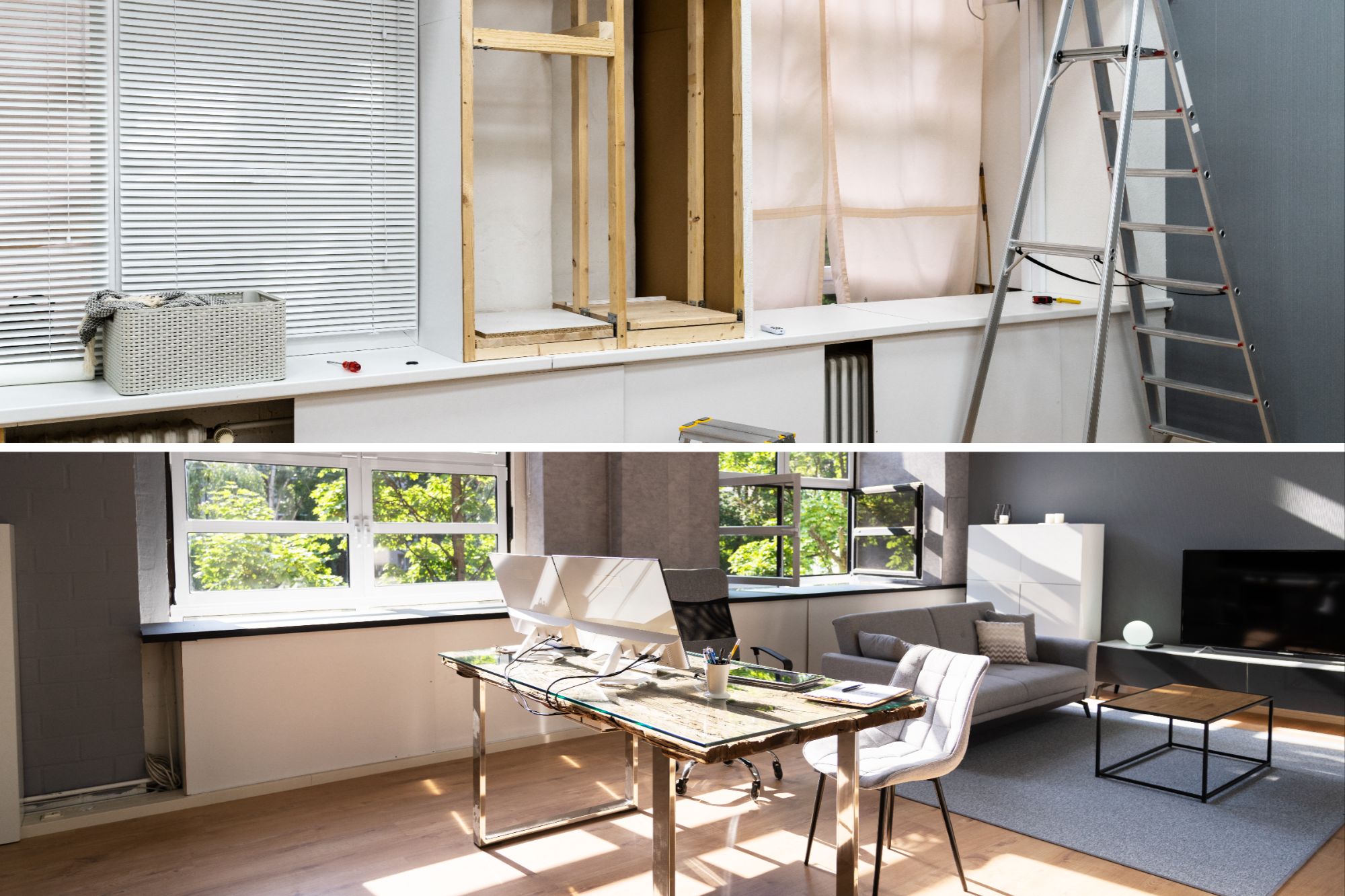
Once purchased, the investor completes renovations to improve the property's condition and market value.
Renovations can range from,
- Cosmetic updates such as paint, flooring and fixtures
- Kitchen and bathroom upgrades
- Energy-efficiency improvements
- Structural repairs
- Converting layouts to improve rental potential
Understanding Sweat Equity
In addition to increasing a property's value through renovations, many investors create what is known as sweat equity.
Sweat equity is the value added to a property through an owner's personal labour rather than by hiring contractors. Tasks such as painting, flooring installation, landscaping, demolition and minor repairs can help investors reduce renovation costs while increasing property value.
For BRRRR investors, sweat equity can improve returns by lowering project expenses and increasing the amount of equity created during the renovation phase. However, investors should ensure they have the necessary skills and obtain permits when required, especially for electrical, plumbing or structural work.
The objective is to create equity through forced appreciation rather than relying solely on market appreciation.
3. Rent
After renovations are complete, tenants are secured and rental income begins.
At this stage, lenders want to see the property producing stable cash flow. Strong rental income can also improve the investor's financing options during the refinancing stage.
4. Refinance
Once the property is stabilized and has increased in value, the investor applies for a new appraisal and refinances the property.
The lender may allow borrowing against the property's new appraised value. This enables the investor to recover much of the original down payment, renovation costs and invested capital.
5. Repeat
The recovered capital is then used as a down payment on the next investment property, allowing the investor to scale their portfolio more quickly.
How Does BRRRR Work in Winnipeg?
Winnipeg has historically been considered one of Canada's more affordable real estate markets, making it attractive for BRRRR investors.
Several factors contribute to Winnipeg's appeal to investors,
Affordable Acquisition Costs
Compared to larger centres such as Toronto, Vancouver and Calgary, Winnipeg offers lower entry prices, allowing investors to acquire properties with less capital.
Strong Rental Demand
Rental demand remains steady due to,
- Population growth
- Immigration
- Students attending local post-secondary institutions
- Demand for affordable housing
The Canada Mortgage and Housing Corporation (CMHC) offers a user friendly Housing Market Information Portal to find recent rental statistics across different Canadian markets.
Areas near the University of Manitoba, downtown redevelopment zones and mature neighbourhoods often attract investor attention.
Cash Flow Potential
Unlike some major Canadian markets where investors often rely on appreciation alone, Winnipeg properties can still generate positive cash flow when purchased correctly.
This makes the BRRRR model more sustainable because rental income helps cover carrying costs while investors continue building equity and expanding their portfolios.
An Example of BRRRR
Consider a simplified example,
- Purchase price: $220,000
- Renovation costs: $40,000
- Total investment (capital invested): $260,000
After renovations are complete, the property is appraised at,
- New value: $340,000
By improving the property, the investor has created approximately $80,000 in additional equity through forced appreciation.
Understanding Loan-to-Value (LTV)
When refinancing an investment property, lenders typically do not lend 100% of the property's value. Instead, they use a measurement called Loan-to-Value (LTV).
LTV represents the percentage of a property's value that a lender is willing to finance.
For example,
- Property value: $340,000
- Maximum refinance at 80% LTV
Calculation,
$340,000 × 80% = $272,000
This means the lender may allow the investor to borrow up to $272,000 against the property.
How Much Capital Can Be Recovered?
Let's assume the investor initially financed the purchase with,
- $44,000 down payment (20%)
- $176,000 original mortgage
- $40,000 renovation costs
Total cash invested: $84,000
After the renovation and refinance,
- New mortgage: $272,000
- Original mortgage balance: approximately $176,000
The refinance proceeds first pay off the original mortgage.
$272,000 - $176,000 = $96,000
In this simplified example, the investor receives approximately $96,000 before closing costs and lender fees.
Since the investor originally invested $84,000, they may recover all of their invested capital and potentially have additional funds available for future investments depending on financing terms, closing costs and lender requirements.
This is one of the primary reasons investors use the BRRRR method. By increasing the property's value and refinancing based on the new appraised value, they can recycle their capital into another investment property while continuing to own the first rental property.
The recovered funds can then be used toward another property.
Why Cash Flow Matters in the BRRRR Strategy
Cash flow is the income remaining after all property expenses have been paid, including,
- Mortgage payments
- Property taxes
- Insurance
- Utilities (if applicable)
- Maintenance and repairs
- Property management fees
- Vacancy allowances
Positive cash flow means the property generates more income than it costs to operate. Negative cash flow means the owner must contribute additional money each month to cover expenses.
For many BRRRR investors, cash flow is what allows the strategy to remain sustainable over the long term. While refinancing can help recover invested capital, strong cash flow helps cover unexpected expenses, reduces financial risk and provides ongoing income while equity continues to grow.
Cash Flow Example
Using the BRRRR example above,
- Monthly rent: $2,200
- Mortgage payment: $1,450
- Property taxes: $250
- Insurance: $125
- Maintenance and vacancy reserve: $175
Total monthly expenses: $2,000
Monthly cash flow: $200
Although the monthly profit may appear modest, the investor is also benefiting from mortgage principal paydown, property appreciation and equity growth over time.
Is BRRRR Better for Rental Income or Resale Income?
The answer depends on the investor's goals.
BRRRR for Rental Income
Most investors use BRRRR to build long-term wealth through rental properties.
Benefits include,
- Monthly cash flow
- Mortgage paydown by tenants
- Long-term appreciation
- Portfolio growth
- Equity accumulation
- Potential tax advantages
This is the traditional purpose of the BRRRR strategy.
BRRRR for Resale Income
Some investors modify the strategy by selling after renovations rather than refinancing.
This approach is commonly known as a fix-and-flip strategy.
Benefits include,
- Faster access to profits
- No tenant management
- Lower long-term exposure to market fluctuations
However, investors lose the long-term cash flow and equity growth that rental properties can provide.
Challenges of BRRRR in Winnipeg
While the strategy can be effective, investors should understand the risks,
Rising Interest Rates
Higher borrowing costs can reduce cash flow and make refinancing more difficult.
Renovation Cost Overruns
Unexpected repairs can quickly impact profitability.
Budget for Ongoing Expenses
When calculating your investment, don't forget to include,
- Property taxes
- Insurance
- Utilities
- Mortgage payments and financing costs
- Maintenance and repairs
- Vacancy periods between tenants
Appraisal Risk
The property's post-renovation value may not be as high as anticipated, limiting how much capital can be recovered.
Tenant Management
Vacancies, maintenance issues and difficult tenants can affect returns.
Financing Requirements
Many lenders require,
- Strong credit scores
- Proof of income
- Rental income verification
- Experience with investment properties
Not every investor will qualify for multiple BRRRR transactions immediately.
Down Payment Requirements
Investment properties typically require a minimum 20% down payment, as lenders consider them higher risk than owner-occupied homes. The exact amount depends on factors such as your credit score, income and the property itself.
This is one of the reasons many investors use the BRRRR strategy. After renovating and refinancing a property, they may be able to recover much of their initial investment and use those funds toward the down payment on their next purchase.
While results vary based on the property's appraised value and lender requirements, the goal is to recycle capital and continue growing a real estate portfolio.
Permits Matter
Before starting your renovation, check whether your project requires permits from the City of Winnipeg.
Common projects that may require permits include,
- Structural changes or additions
- Electrical work
- Plumbing modifications
- HVAC installations or alterations
- Basement developments or secondary suites
Obtaining the proper permits and completing required inspections helps ensure your renovations meet building code requirements and can prevent delays when refinancing, renting or selling the property.
Is BRRRR Right for You?
The BRRRR strategy is most effective for investors who,
- Want to build a long-term rental portfolio
- Are comfortable managing renovations
- Have access to capital and financing
- Understand local market dynamics
- Want to generate positive cash flow
- Are patient and focused on wealth accumulation
In Winnipeg, where acquisition costs remain relatively affordable and rental demand is strong, BRRRR continues to be a popular strategy among investors seeking recurring rental income, cash flow and long-term equity growth.
For those focused solely on short-term profits, a renovation-and-resale approach may be more suitable. However, investors looking to create sustainable wealth often favour BRRRR because it combines cash flow, equity creation, capital recycling and portfolio expansion into a single repeatable process.
Final Thoughts
BRRRR is more than just a real estate acronym—it's a framework for scaling an investment portfolio through strategic property acquisition, renovation and refinancing.
Winnipeg's affordability and rental market fundamentals make it one of the more practical Canadian markets for this strategy. While it requires careful planning, financing and execution, investors who successfully implement the BRRRR model can create a pathway to long-term financial growth through real estate.
By understanding how capital, equity, sweat equity and cash flow work together within the BRRRR process, investors can make more informed decisions and position themselves for long-term success in Winnipeg's real estate market.
Tara Zacharias, REALTOR®
Categories
Recent Posts



Leave a Reply
 REALTOR®
I became a REALTOR® because I truly enjoy helping people find the place that feels like home and because providing exceptional service during such an important moment in someone’s life is something I genuinely care about. Supporting sellers as they move on, move up, or move forward is just as meaningful, and being part of that transition is something I’m grateful to contribute to.
I make the buying or selling journey feel organized and approachable with clear communication and practical guidance. With an approach supported by market data, trends, and neighbourhood insights, you'll always understand what’s happening and how to make the most informed decisions.
Whether you’re buying your first home, selling a place filled with memories, or planning your next step, I’m here as someone who listens, shows up, and puts your goals at the centre of every decision. I'm focused on what serves you best and I make your best interests my TOP priority.
I'm Tara Zacharias, a real estate salesperson located in the vibrant city of Winnipeg. Thanks for stopping by and taking the time to get to know me!+1(204) 293-0933 tara@tarazacharias.com330 St Mary Ave, Winnipeg, MB R3C 3Z5, CAN
https://tarazacharias.com/